Showing posts with label Concerns. Show all posts

Monday, August 5, 2013

Warning: Challenges Ahead!

I have about two weeks until I head back into my classroom, so it's time to try and get back into the swing of things.  It would be much easier to spend all my time with this cutie (2 months old today!), but duty calls...


This year is going to bring on its own set of new and exciting, yet scary, challenges.  Our district is going full force into implementing Common Core math classes, and have chosen the Integrated rather than Traditional pathway.  What this means is that "Algebra 1" is no longer really a class, it is what we are currently calling "Course 1", and includes a mix of standards from the three traditional courses of Algebra 1, Geometry, and Algebra 2.

What this means is that the majority of the work I have dedicated my time to the last 5 years, which is posted on www.kirchalgebra1.blogspot.com, is now obselete and I am starting from scratch for this coming year.  (Thankfully my Math Analysis course will be staying status quo for at least this year, so www.kirchmathanalysis.blogspot.com is still good to go!)  Curriculum writing teams have been hard at work creating units of study for these new courses and we should be able to see them by about a week before school begins this year.  Due to my joyful interruption this year, I was not a part of these writing teams as I would have liked and greatly enjoyed.

While I am very excited about the deeper level of learning the Common Core can bring, my Type-A planner self is basically freaking out.  My mindset of teaching and learning has shifted so drastically in the last 2 years, that I don't know how I will do with a cookie cutter curriculum that I haven't had time to tweak and modify to fit my style.  I keep telling myself that it will all work out and everything will fall into place... but I'm one of those people that likes to have everything organized and planned for the first 3-4 months of the school year before the year even begins!  I like to see the big picture and figure out how to structure it best to meet student needs.  This year, I will be teaching what has been handed to me with little to no time to plan ahead in the way that I always have.

One of the biggest questions I have for all of you, especially math teachers but all subject areas are welcome to chime in, is how you structure a flipped classroom in math with little to no video instruction.

Now, let me clarify, I am 100% on board with the fact that a flipped classroom is not about the video, but about what you do in class, the face to face time you have with students, the higher order thinking that is able to occur, etc.  The activities and lessons that are embedded within the curriculum should be really great and support my mindset of what I want to be happening in my class (again, I have yet to see most of it, so I'm kind of hanging in limbo here but have confidence in what is coming).

However, there is still a level of direct instruction that must occur at this level for the students to be successful.  I don't believe direct instruction should occur in the group learning space, but rather in the individual learning space where students can learn at their own pace, in their own time, and in their own place.  The easiest way for this to happen is for direct instruction to be placed on a video.  (Please note that I do not consider direct instruction to HAVE to occur before the lesson is introduced; in fact, many lessons for this year from what I've seen I can see an exploration phase in class, direct instruction coming afterwards, and then more application and practice in class... similar to the Explore-Flip-Apply model).  To put it bluntly, I simply will not have the time or energy to dedicate to making videos like I have the last two school years, and I cannot see myself sacrificing the time with my little one to run a flipped classroom in my new "Algebra 1/Course 1" in the same way as I have the last two years.  

And, on a random note...I feel like I want to have this figured out before the school year begins and not change my mind midway through because this level of students has a tough time adjusting to major changes.  If they are going to be doing anything similar to my previous two years with videos, WSQs, online work, etc, I want to start it from Day 1.

Okay, I hope that made sense :)  I have been on Mommy brain for the last several months, so it's time to try and get back in the groove!

So, please share your experiences, your thoughts, and your ideas.

Friday, May 18, 2012

The three students that struggle in my #flipclass

I have come to the realization that there are certain types of students that I just don't click with. 

One of the greatest benefits of the flipped classroom is the relationships you get to develop with students because you work with them one-on-one so much.  However, sometimes certain types of students just rub you the wrong way and the daily one-on-one interaction wears you thin. 

Here are the three types of students who have worn me thin this year with the Flipped Classroom.

1. The cocky "I'm always right" student

This student doesn't want to think. This student wants to get the math problems completed correctly and move it.  Understanding of what is actually going on?  This student doesn't need it.  Collaboration and conversation with peers to deepen the connections between the material? Not necessary.  This student is smarter than them anyways. Showing work? Not needed.  The right answer is all that's needed - why show the thought processes and the work behind it?  Make a mistake?  Oh, gosh, never. The teacher must be wrong, because this student would never make a mistake.  This student is satisfied sitting alone, mindlessly doing math problems, and moving on. 

2. The attitude "Give me what I want when I want it" student

This student does not want to sit in a group.  Although talented, this student chooses to work with the lowest students in the class.  Not to help them, mind you, because when they don't get it this student sighs and rolls eyes at them.  Rather, this student doesn't want to have to interact and share ideas with "same level" students because that would require more work and social interaction.  When this student has a question, the hand is raised and Mrs. Kirch is the only one who can answer the question.  When Mrs. Kirch does not arrive right away, or stops to help another student first, this student sighs, rolls eyes, and complains.  When asked to get up and ask another student the answer, the student refuses to do so and then again, sighs and rolls eyes.  When asked a challenging question that requires thought, or even when asked to just participate in class discussions, this student sits there alone and says nothing.  This student gives off the attitude to everyone around her that she is better than them, but doesn't want to help them in any way.  If this student doesn't get the answer desired immediately, some sort of attitude is given.  Conversations, conferences, and consequences only lead to more attitude.

3. The lazy "Let me cheat my way through this system" student

This student is full of excuses daily.  Excuses why the video didn't get watched.  Excuses why the homework is late.  Excuses why the homework is incomplete.  Excuses for off-task behavior.  Excuses excuses excuses.  This student writes crap down on almost every assignment and tries to get it signed off, not realizing that it's not about completion, it's about LEARNING.  This student would rather get the right answer, no matter if the steps make any sense at all, than actually understand the process.  This student claims tutoring will be attended weekly, but yet this student never shows up for the extra help.  This student fails concept quizzes again and again, but won't sit down to correct them to learn from mistakes made.  This student "completes" assignments to earn points, avoid punishment, but not to actually learn.  This student is entitled and lies to himself on a daily basis on what is actually understood, because actually realizing the understanding ISN'T there would mean that more effort (without excuses) would need to be made... and this student doesn't want this.

Do you have any of these students in your class?  How do you work with them?

Saturday, May 12, 2012

Student responsibility and motivation rant

Another honest rant that I needed to get out.  I just hope by the end I make sense to myself and can figure out what I should do.  Any advice from personal experience is appreciated... I know there's not one right answer to anything I'm frustrated about below, but anything is worth a try at this point!  I also want to mention that these frustrations are in regard to my CP Algebra 1 class, not my Math Analysis Honors class.  These are students who came into my class in September with a failure mindset (all of them had received C's, D's, or F's in their previous math classes; most of them with D's and F's).  We did not flip until the end of December, so the whole first semester many of them struggled to grasp the basic concepts... but yet we moved on anyways... Now, we see the results:

I just graded my Algebra 1 Chapter 11 test. I knew ahead of time this test was going to be a struggle - it is the hardest chapter of the year.  It covers Rational Expressions, and requires students to have mastered the skills from  Chapter 1,2,7,8, and 9 in order to succeed.  This chapter incorporates so many skills into one problem that if one skill is lacking, the whole problem can be wrong.

I decided to grade this test on a 50-100 scale.  What that means is (out of 10 questions), students got 5 points on every question just for trying, and then the other 5 for getting it perfectly right.  No in between partial credit, no "almost there"... just right or wrong.  I guess I graded it this way out of selfishness - I didn't want to spend 3-4 hours grading this test trying to figure out where to give points and where not to, so I spent about an hour.  I figured getting the free 5 points for trying made up for the lack of partial credit otherwise.  No matter how big or small the mistake was, if it was wrong, it was fully wrong.  I also graded it this way to try out a method that has been shown to us to be "motivating" to students, because the lowest grade they can get is a 50%...and if a student gets a score lower than a 50%, it is just completely de-motivating and they will all but give up - so give them that free 50% as a baseline.

I know there are pros and cons to the way of grading I just described above, but what's done is done and I'm not going back at this point to re-grade just so students can earn some more "points".  If they had mastered the material, they would have it right.  I did have 3 100%'s and about 8-10 more A's (out of 93 tests).

There are several things that trouble me about this test:
1. We started this chapter a month ago.  We spent a good 3 weeks on the material, took a week off to review for state testing, and then spent the last week alone just reviewing and practicing the material in class.  Nothing new this week, just practice and review. 

2. The students could tell me the steps of what to do out loud... they could repeat the chants we use to memorize the steps... they could identify how to approach the problem in class... then what happened on the test?

3. Every day this week we did a whole class "warm-up" where I did 2-3 problems with the whole class.  We did a total of 10 problems on Mon-Thurs as warm-ups.  Those IDENTICAL 10 problems were the ones I put on the test.

4. I am available for extra help every day before school, during lunch, during class (with the flipped classroom, I'm there to help all the time), and after school.  My students will be working on problems and I'll be checking on them, guiding them through steps, etc.  Several of them will be doing fine, and I'm hoping that test anxiety just got in the way (another issue itself).  However, there are several that I have in mind right now that I can visualize every day...I check in with them, they say, "No, no, I got it!" and so I move on.  I guess I should sit down with them and say "No, show me".  A few times, I did that and I tried to make the kid aware that he was doing things wrong and needed to practice some more... but that led to ZERO change in behavior.  Those are the same kids spending several minutes in front of my worked out answer book copying my work down step by step.  I guess they think that by copying the problem down step by step from me they are learning??!?!?!  I don't get it!!  How can I help them if they refuse my help?  How can I help them if they are LYING to themselves saying they get it, I tell them (nicely) that they aren't, try to point them in the right direction and tell them to practice some more similar to that, I go to help another kid, and that student is going straight to the answer key to copy.  They LIE to themselves all the time about their progress and achievement...how do I teach them that? How can I teach them to know what they know and know what they don't know so they can get help? How How How? 


What troubles me about handing this test back:
1. Their scores are a lie. If a student got an "80%", that really means they got 6/10 problems correct.  If a student got a "70%", that means they got 4/10 problems correct.  It just doesn't match up to me.  Now, several people at our school have asked us to start considering/using this 50-100 scale instead of the 0-100 scale.  It is just so hard for me to grasp how those percentages line up.  If a student gets four questions right out of ten, how come they have a C?  That is not even close to mastery/proficiency.

2. I really want to give the kids a wake-up call and tell them what their REAL scores are, but I don't know what benefit that give them.  Half of them wouldn't care, half of them would be grateful I graded differently, put the test away, and move on, and the other half would get depressed and feel like a horrible person for doing so poorly on a test. (Yes, I realize I just made my class have three-halves... deal with it :)).

3.  There are some kids that really did try - ones that don't fit into the molds I mentioned above.  Ones that actually asked for extra practice and went over problems...and it just didn't stick for the test. I don't want them to feel like their efforts were in vain.

4.  I know every kid in my room (well, most of them) will say "I'm going to come in and retake this... I'll do it this week... I will". And they won't show up. Because it's happened all year.  I changed my test retake policy this semester to where students had to fill out an "application" to retake.  I used to FORCE every kid to retake any test they got below a 70% on. I would remind them every day. I would send a form home. I would have a signup calendar.  I would schedule times with them.  Basically I would hold their hand and baby them into retaking it.  This semester I tried to put the responsibility fully in their hands.  If they wanted to re-assess, they would take the initiative.  Out of all my classes (even math analysis), I have had TWO retakes all semester, and one of them only happened after two parent conferences and setting up a tutoring schedule/contract between parent/student/teacher.  Without the hand holding, the students don't re-assess.  So, I have a choice - do I go back to the hand-holding because the students obviously "need" that, or do I continue to let the freedom be in their hands and hope they figure it out?

To tie this post into things I have been considering regarding the flipped classroom, several things stick out to me right now:
1.  Why do I have students working on and testing on Chapter 11 when many of them haven't mastered Chapter 1,2,7,8,9?  If they haven't mastered those skills, they automatically are not set up for success.  This is what leads me to wanting to do some sort of mastery system next year, where the students can't move on until they've learned it.  I just have no idea how that will work with some of the low motivation I have with my students right now.  Will they commit themselves to learning the material when they have "sucked" at math their whole lives?  Will they work hard enough and practice enough to master it?

2. Where is the balance between quality assignments and drill and kill?  I don't really assign that many problems for classwork/homework, because I want those problems to be done well and correctly.  Quality over quantity is what I always say.  In addition, with my students, if I assign them 15 problems, they won't do them all or they will just rush/copy/BS/etc.  So, I assign them 4-8 and expect them to be done well.  I give them the answers because I want them to check and be motivated enough to figure out what their mistakes are if they get it wrong.  But, instead, what I get is a bunch of students looking at the answer first and then writing a bunch of stuff down to look like they ended up at the answer that is on the back of the key.  I have had several personal conversations with students this year about this and they smile and admit that it is the truth... but they don't change any habits.  When will they learn?  I have started to feel like I need to give my students MORE practice so they can master the material, because what I am giving them doesn't seem to be enough, and they aren't independent enough to want to do extra practice because it's good for them - they will only do what is assigned, if that.

3. I have been leaning towards the idea of "test deadlines" for next year and having the students test when they are ready.  I have been experimenting with this using my Concept Quizzes to see how it goes.  For some students, it works great... for others, they just end up taking ZERO quizzes the whole chapter because they are "never ready".  I know a little bit of that has to do with the fact that we are so far into the year at the point, that the pre-requisite skills they never learned in Chapters 1-5 (before the flip) are affecting their ability to succeed at these later chapters.  So, how would having "test deadlines" work?  I feel like there would be students in my Algebra 1 class who would not "be ready" to test on Chapter 1 until Christmas Break!  Where would that put them with even getting a grade for first semester Algebra 1?

In conclusion...

1. We have one chapter left (much easier than this one, at least it should be!), a project, and a final.  I am now leaning towards not doing the end of the year project and just spending that week having students re-assess in class.  Of course, I would love to see them in the next two weeks coming in on their own time and being proactive in their learning... but I can't really see that happening and considering the # of D's and F's I have right now in those three classes due to so much missing or incomplete work, I may not have much of a choice but to find a way to help "raise their grades".  I'm not a big fan of extra credit - they need to show me that they know the material.  But, if I really do set aside five days in class to do this, will students actually care?  Will they actually be productive?  Will they actually learn, fix mistakes, and retake stuff?  Or will it just be a frustrating waste?  What will I do with my kids who don't need to re-assess (have them be tutors maybe?).

2.  There is just so much wrong with this picture for me!  But, a lot of it goes out of my walls and out of my control.  Student intrinsic (and even extrinsic!) motivation, valuing education and learning, perseverance and hard work, dedication to a task/goal, integrity and honesty in all you do, focus and determination, effort at even the hardest and most arduous tasks... I feel like these have all but disappeared slowly in my five years as an educator.  Every year it seems to get worse.  Is anyone else sensing that?

3.  If you actually made it through this whole post, I'm impressed :)  Thanks for following me on my honest journey and I hope you might have some insight for me... or at least let me know that I'm not the only one who feels this way.  Thanks for reading :)

Friday, April 20, 2012

Students Slacking Off

We are hitting the point in the year where students are starting to slack off a little bit.  More and more students are showing up to class unprepared and with the attitude "I'll just watch the video in class".  Not because they don't have technology access, but just because they don't feel like doing homework.  (Well, I do have one student without internet at home, but he has been told repeatedly to bring a flash drive in, or to ask to borrow mine and bring home, but he has refused to do so.  He just likes to be able to use the excuse of "I don't have internet" so he doesn't have to do his homework)

My daily, friendly reminders to the students about the importance of watching the video before class are usually taken to heart.  The majority of the students know that they will get the most out of class if they have already watched it, and they want to be able to participate in the discussion and in getting their questions answered.  They want to work with each other and solve problems together.

However, there are still many students who will find any excuse to not have to give any effort at home.

So, today I decided to get the parents involved  (I have called many parents in the past, but today it was time for a total "takeover").  Every single one of my students who did not watch the video last night called their parents DURING CLASS to tell them that they came to class unprepared.  Then, I spoke with the parents for a minute or two.  Between 20 and 30 parent phone calls were made today.  I plan to continue this daily throughout the next week or so, and longer if possible.

The students were in shock when I told them to go get on the phone.  Most of them were embarrassed because they knew they didn't do what they were supposed to and were now going to get in trouble with their parents on a Friday night.  But, I'm pretty sure they will come to class prepared on Monday.

If not, we will call again.  If anything, I hope the parents finally get so annoyed with daily phone calls that they start monitoring their student's homework completion like they should be in the first place!  I've mentioned before that I realize I'm not a parent, but I'm pretty sure that when I do have that privilege, I am going to make it a priority to make sure my students are getting their work done and check up on them.  I hate it when I hear parents say "they said they did it", or "they said they didn't have any".  You REALLY believe everything your teenage son/daughter tells you?  You don't actually ask to see it?

I started the phone calls during 3rd period today basically out of frustration because 3 of the students have already come to class unprepared this week once or twice before.  Then, I decided to just do it all day to make a point.

We'll see how it goes the next few weeks, but this might be something I implement at the beginning of the year next year.  Students need to know that even though their WSQ charts are turned in at the end of the week and they do have "weekly deadlines", their "daily goals" are still expected to be met ON TIME!  There are very rare circumstances that would allow otherwise (hence the need for a few computers in class, but honestly I would love those computers to be used for students working ahead or re-watching, not for the initial watching).

Students must learn to take responsibility for themselves. They must realize that they are the ones responsible for their learning and their success.  I love how the flipped classroom helps to mold that.  However, on days like today, there are still times for the "adult" to step in and guide the students along to understanding how and why to take responsibility for their learning.

These are the excuses I got today: (ugh I hate excuses!)

1. "My internet didn't work last night" (but this student was in 3rd period and we had an hour long homeroom period as well as an hour before school that he could have watched it)
2. "I had a track meet until 8pm last night" (and you are telling me you didn't know you were going to have a track meet and didn't want to plan ahead...or that you couldn't come in before school or during the hour long homeroom period to watch it?)
3.  "I forgot" (Don't believe that excuse when they have a video 3-4 nights a week)
4. "I watched the video, I just didn't know the WSQ had to be submitted online" (ummm... we've done this for the last 3 weeks straight now and talk about it/show it on the screen every day.)

Overall, it has been a really great week in the flipped class and today is just a reminder that all students of all levels need a little push in the right direction every so often to make sure they stay on track.  My Week 11 reflection will be coming sometime tomorrow :)

Thursday, April 5, 2012

Critics of the Flipped Classroom

I truly believe that everyone is entitled to their own opinion.  With that... here is mine :)

In the teaching profession, we are often so locked into our own worlds and doing things our own way that we can easily go days, weeks, or even years without knowing what is going on next door or down the hall.  

One of the reasons I love teaching so much (among many) is that I am pretty much in control of my classroom, how it's run, and what is important inside my four walls.  However, this leads to one of the biggest pitfalls that it is so easy to fall into - not collaborating and sharing ideas with those around you.  Staying locked in your own world, with your own ideas and own opinions - and never sharing them for whatever reason.

The community that I have found via this blog, Edmodo teacher communities, the Flipped Class Network, and Twitter have been instrumental in starting my flipped classroom and absolutely essential in my professional growth and learning with regards to not only the flipped classroom, but teaching in general.  In my opinion, connecting with other educators is an essential part of being a teacher.  We can't teach in isolation.

With that said, I have encountered so many "flipping" teachers across the globe in the last 3 months.  Their ideas and encouragement have been indispensable.  However, I have also encountered several articles, comments, etc of people who are very strongly opposed to the flipped classroom.  

Like I started this post by saying, I truly believe that everyone is entitled to their own opinion of what they think is good or bad, what works and what doesn't.  What I am bugged by, however (and the reason behind this post), is that (in my approximately 10 months of research all over the internet)  I have not yet encountered a critic of the flipped classroom who has actually tried the flipped classroom themselves.  They will write amazingly long posts of how bad the flipped classroom ideology is and how horrible it is for our students, but they haven't tried it themselves.  That really bugs me.  [Or, if they are out there, they haven't been willing or open to share about their failures and why their attempt at the flipped classroom didn't work.]  While critics seem to make some valid points, the counterarguments to those points are so clear to me and their points now seemed to be based off of ignorance and lack of personal experience with the flipped classroom model.  

My big question for the critics: How can you know if something doesn't work until you've tried it yourself?

I don't believe that the "flipped classroom" is a "magic bullet" or the one solution to solving today's educational problems.  I don't even believe the "flipped classroom" would necessarily work well with every teacher's style and preference.  I don't even believe the term "flipped classroom" really encompasses the changes I have made in my classroom this year; if anything, I feel like the phrase is a turn-off to some people who automatically stereotype every flipped classroom to be a certain way.

I posted earlier this year about "9 reasons I'm a flipping convert".  The reasons why I flip my classroom continue to grow longer with each passing week.  Here are a few I have mentioned before, but come to mind right now.
  • Students are taking responsibility for their own learning. It's a skill that must be taught, and they are getting better at it.  This will help them this year, next year, and as they go off to college and get jobs.
  • Students are required to do more than rote, mindless math practice problems.  They have to be able to talk about it, explain it, ask questions about it, teach it to others, and make connections with other material.  The conversations I have been able to have with my students this year are so much deeper, so much more detailed, and so much better overall than anything I have been able to facilitate in my five years of teaching.
  • Students all have equal access to a challenging math curriculum that they can go through at their own pace and that they can always go back to (because of the video lessons).  Absences due to illness, sports, or family issues are no longer a problem in my class.  Do I still have plenty of absences? Yes. But they are no longer stressful for me or the student because the student can come back to school fully up to date on the lessons and just needing the extra support to tackle tough problems, not the need for me to re-teach everything they missed.
  • Students are able to receive differentiated instruction based on their needs and their level of understanding. Students who learn at a slower pace or who have to hear something five times before it clicks have the opportunity to do so.  Students who learn at a faster pace are able to move through the curriculum faster and tackle more challenging problems that may be skipped for the general population.
  • Students learn to work with others and to challenge each other's thinking on a daily basis.  There is no longer the student who sits in the corner of the room feeling helpless, embarrassed, or intimidated. Flipping my classroom has created a learning community where all are involved and all have the opportunity to succeed.
  • Students are the ones doing the math in my classroom.  They are not sitting there watching me do amazing math and then going home to try it themselves with no support.
  • Parents love the ability to see their students actually doing math "homework" by watching the video and the relief it gives them from trying to have to keep up with and help their student with math that they don't remember how to do.
  • Students are scoring higher than last year by 2-8% on each test, the percentage of students receiving A's and B's on my exams is increasing greatly, and the percentage of students receiving D's and F's on my exams is decreasing.  (See Flip Data for more details)
Critics of the Flipped Classroom who have never tried it tend to think (based on my reading over the last year):

1. It's all about the videos
Videos are a tool that are used to help create the flipped classroom. I could use the textbook - although I don't think it would work nearly as well because I am able to reach visual and auditory learners through my videos (and I hope kinesthetic sometimes, too). I incorporate the same jokes, examples, voice inflection, songs/chants, and "fun" into my video lessons.  I can still follow-up the next day with more detail, more examples, more connections, more of anything that I want.  However, with the videos, my bases are covered and I can use class time for more discussion, collaboration, and actual student-focused learning

2. It creates an issue with equity/access to technology
I work in a district with about 70-75% of the students on Free and Reduced lunch.  We are in a low-income area.  There is absolutely no issue with access to technology at my school.  If students don't have access at home, they can use it at school either before/after school or during class if needed.  If I have to read another person say that we should abandon the flipped classroom because it is unfair for some students, I don't know what I will say.  We are in the 21 century and students must not only be able to use technology, they must learn how to use it responsibly and the value of technology as an educational tool and not just a social tool.  If they don't have the resources at home, we can provide that for them to the best of our ability.  That's not an excuse.

3. Lecture is always a poor method to teaching information
I still am a believer in the value of direct instruction under certain circumstances, especially in math.  Is there time for guided exploration? Yes, for certain lessons.  However (here is a great article), studies show that for most learners, the first time something is taught it needs to be taught directly and without all this exploration/inquiry stuff.  It just confuses them and does not help their growth in learning.

4. There is never whole-class teaching
There is whole-class teaching when there is a need for it in my flipped classroom.  It's focused on my students' needs, not mine. More often than not, I am doing small-group teaching (5-10 students), although there are times when I do 20 student teaching or 40 student teaching.  I'd much rather teach those that need it and let those who don't continue to explore and move on.

5.  It requires students to do work at home when they should be spending time with family.
What's wrong with students having homework?  I know my perspective on this issue is skewed right now because I don't have kids yet, but I don't see a problem with students having to do homework and manage responsibilities when they are in high school. [Do some teachers overdo the homework and give an hour or two a night for just their class? Yes. But that is not what I am referring to here].  When I see my students spending over an hour a day on facebook, another hour texting, another hour watching tv, and another hour sitting outside on the school steps doing nothing but waiting for their ride, that doesn't make me feel bad about asking my students to spend 20-30 minutes a night preparing for math class.  Do students have responsibilities at home (cooking, cleaning, babysitting)? Yes, most of them do to an extent.  Does this mean they should be excused from taking responsibility for their education and learning how to manage their time, making sure to do their homework, their chores, and still spend time with family and friends? No. 

Are there concerns that need to be addressed about the flipped classroom? yes.
Can the flipped classroom be done "badly"? yes.

Are there concerns that need to be addressed about ANY teaching strategy? yes.
Can ANY teaching strategy be done "badly"? yes.

Could I easily ignore all of these critics and not read anything negative about the flipped classroom and just stay in my little bubble?  Sure.  But I think there are good things that come from seeing both sides of the fence and from really thinking about why you are doing something.  If anything, reading the criticisms of the flipped classroom help me to refocus my own strategies and make sure my classroom (1) is NOT focused on only the videos; (2) provides full access to all students; (3) incorporates aspects of inquiry and exploration where warranted; (4) is fully student-centered and focuses on student needs; (5) provides my students with meaningful and do-able homework that will help them feel successful but yet still holds them accountable and responsible.

Flip or not? I believe that whether it is flipping, tutoring or any other viable educational tool, all strategies have a place. The only “magic bullet” that I know of are teachers who are willing to teach beyond understanding to accomplish more than comprehension and create life-long learners. Those teachers who are willing to try everything to reach, teach and learn from their students will become the leaders in using the flip strategy. Their students will be the real winners.

I flip my classroom not because of what it does for me, but for what it does for my students.  My students are the "real winners" now and it works for me, my teaching style, and my classroom.

All I ask is that if you don't believe in the Flipped Classroom as a viable instructional tool/strategy, please try it yourself before posting endless essays and comments online about how much you think it sucks.  Please stop generalizing the Flipped Classroom down to one single method, one single type, one single purpose.  It is so much more than that.

On a side note: Can we come up with a new name other than "Flipped Classroom"? I really am sick of the misconceptions/connotations the phrase brings with it.

Saturday, March 31, 2012

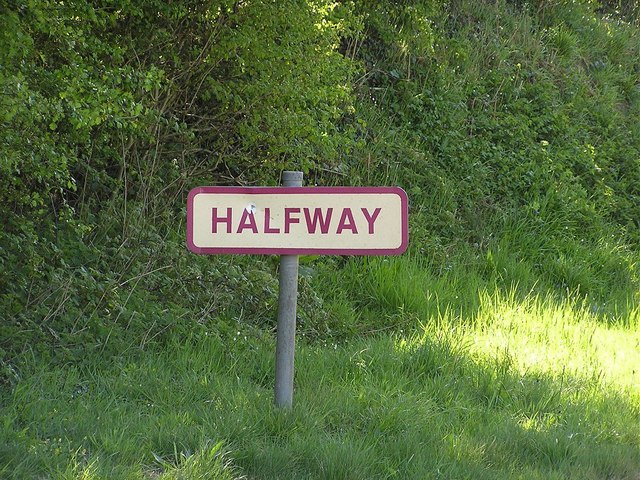
Reflections on Week 9 (The Halfway Point!)

http://s0.geograph.org.uk/photos/40/57/405720_e278ea49.jpg
Week 9 of the Spring Semester is now over - we are now to the halfway point!  It is amazing to look back and see the growth and development of my flipped class over the last 9 weeks, both for me as the teacher and for my students as learners.  I can't wait to see what the next 9 weeks hold!

All Reflections from This Year can be Found Here. 

*Each week, I spend some time personally reflecting on the week - what I did, what worked, what didn't, what I liked, what I didn't, etc.  I try to organize my reflections in a similar manner each week, since they do get pretty long: (1) Math Analysis; (2) Algebra; (3) Sharing and Collaboration; (4) Other Thoughts; (5) Running lists (Things I've heard this week that I love; Characteristics and qualities of my flipped classroom that I want to keep; Changes I've made this week that I like; Ideas I'm still contemplating and experimenting with)I hope these reflections give you insight into my classroom and give you some ideas to try in your own flipped classroom.  I appreciate any comments, feedback, ideas, and follow-ups that you provide, so please comment and join in on the conversation! 

For those of you who read my weekly reflections consistently, you will notice a change this week compared to the past.  These posts will be shorter with links to more detailed external posts on specific topics.  I was finding (for myself) that it was hard for me to go back and find a previous post on a specific topic because it was hidden among a huge weekly reflection.  So, hopefully this will alleviate that problem.


I posted about several other topics this week, including:
1. Great student quotes from Math Analysis on Wednesday ("They just make me smile..."  post here)
2. Parent thoughts on the Flipped Classroom (post from Open House Thursday night here
3. #flipclass chat - Biggest Risks (thoughts from the chat archive from Monday night  since I wasn't able to participate in the live chat here)
4. Initial impressions (thoughts from 2 teachers and an administrator that visited my Flipped Classroom a week ago here)

Math Analysis
It has been another fabulous week in my Math Analysis flipped class.  I love the relationships that I am seeing my students develop with one another and the comfort level they have in working with each other and asking each other questions.  A true community is forming, and I really think that every student feels they add a valuable piece to the learning that happens every day.

I think that having the students begin creating their own content was a GREAT idea because it gave them one more level of ownership with the material.  I don't know how often/how many I want them to make them because with anything, "too much of a good thing is a bad thing".   With some continued feedback from my students over this week off of Spring Break, hopefully I'll have an idea of how to continue this throughout the year.

We tried A LOT of new things this week, including:
1. Online WSQ submissions (see new post here) I still have a lot of pros and cons with this idea - I'm not sure how to merge what I want with what I'm given under my current way of doing it.
2. My videos made using a new software on iPad (see new post here) This was basically an "epic fail" (in the words of one of my students). I'm going back to my usual way.
3. Continued student-created videos (see new post here). This turned out amazing. And, from my students' comments, they really understood the purpose and reasoning behind making them.  Definitely a keeper!
4. First "take home test" for trig identities (see new post here). Student feedback on the process was positive. I won't be grading these tests until later this week during spring break, so I'll have to post again later about that. Students liked the ability to use all available resources and having as much time as needed (some students spent 8 hours on the test!) to work through the trigonometric proofs.


I was talking with one of my students casually this week after school and they described class time as "chaotic but productive".  I would agree. It does get pretty crazy with students doing so many different things, but yet 95% of the students are on task throughout the whole period.

There were several instances this week where I wanted to take another "360" look at my classroom.  However, my iPod, cell phone, and two digital cameras were all being used by student groups to make their own videos that I couldn't.  If I could just freeze time and look around my classroom, it is seriously NOTHING like it has been in years past.  It is truly a student-centered place where learning is happening every day.

One issue I am encountering is just making sure all content is available for students in a variety of places.  So far this year, I have been uploading all videos to both YouTube and SchoolTube.  Honestly, it's a bit annoying having to upload videos to more than one place but here are my issues:
  1. YouTube streams well on all devices, especially mobile devices...but doesn't work on campus
  2. SchoolTube works on campus... but doesn't work on all mobile devices, doesn't stream as well, and is more prone to upload errors
The solution? I don't know. I wish YouTube would just be unblocked, but that is not an option (already asked about it). 
Thoughts? Ideas? Suggestions?

Algebra 1

I think I say this every week, but my Algebra 1 kids are "coming along".  I love what I am seeing from my top kids, my middle-of-the-road kids are making progress in the right direction, and I am still trying to find a way to motivate my low kids and have them at least learn SOMETHING every day.

One of my low-but-almost-middle-of-the-road students came in one morning earlier this week for some remediation and retaking, and said something to me that I immediately had to write down...
"I finally realized how lazy I was when I watched the videos. I was just wasting my time! Now I understand what you mean you say to actually watch it"
He was re-watching some videos from several weeks ago and I think it finally clicked with him that when he actually really watched the video and tried to make sense of it, he understood it!  He realized how much time he had wasted just going through the motions for most of the semester thus far.  I only hope that his epiphany lasts for the rest of the year and it rubs off on some of his classmates.  It is such an important discovery for the students to make, and I really think it is THEM that has to make it.  I can tell them over and over again the importance of watching a video and actually paying attention and learning from it, but at some point they have to realize the value of it and learn that lesson themselves.

We also tried A LOT of new things this week in Algebra 1, including:
1. up to a "3 minute WSQ"
2. Differentiation for "super-low" students (see new post here)
3. Daily Goals with Weekly Deadlines (see new post here)

I am getting happier as time goes on with the timed WSQ process in class.  I increased the time to three minutes this week without any issues - students still stayed focused and talked through the whole time period.  I feel like they are getting more comfortable with each other as well as with the process.  One of my favorite parts of these times is walking around the groups and hearing them ask questions of each other.  Normally, one of them will look up to me for the answer and before I have the chance to answer, their group member will jump in and answer it or at least begin talking about it. 

 I love the ability to NOT SPOON-FEED. If they are stuck on a problem, I do one of several things:
1) Ask them a probing question to get them thinking and try to trigger something.
If that doesn't work,
2) Ask around the room for a student who understands it or one who I remember helping with it earlier in the day or the day before.
If that still doesn't work,
3) Give them the first step or two of the problem and then set them out to work it out on their own/with their group.
 In the past, I would find myself working out the whole problem for them and showing them step-by-step how to do it.  At that point, they had the problem "done" but they hadn't done much learning. I did the amazing math, and they watched.  I don't think that is the way a student learns.

In sad/frustrating news, I had four students caught cheating this week in one class period of Algebra 1.  Two on the Chapter 9 test on Thursday (a student turned around and asked a question of the person behind him and later on the student tried to whisper the answer back), and another two today (a student took a classmate's homework assignment off her desk, erased her name, put his on it, and tried to submit it as his own).  It is so incredibly disappointing to me when those things happen.  Besides teaching my students about math, I hope I am teaching them about life and the value of responsibility, respect for themselves and others, and most of all INTEGRITY.  It takes a second to lose someone's trust, and a whole long time to earn it back once it's been lost.  Besides that, it is so sad to me that these students still think school is about "earning points" or "avoiding punishment".  The student who cheated on the test needed the answer to a simple division problem for a factor tree that was worth 2 points, but now he may have cost his entire test grade (school policy) in addition to receiving severe consequences.  The student who stole the homework assignment was trying to avoid a school-wide homework punishment, of which he is currently up to receiving a Saturday School because he has missed so many assignments in my class.  He stole an assignment that he had a week to complete on his own, but was too lazy to do so.  So now, he will be receiving a Saturday for that and another one for plagiarism.  Above all, it's just so disappointing that all four students involved are good kids.  They are kids I have seen progress in this year.  They are kids with so much potential.  They are kids who show me glimpses of greatness in both work ethic and math skill. Maybe it is good we have a week off from Spring Break and they can be ready to have a discussion about their actions when we come back.

Sharing and Collaboration

An AP Bio teacher at my school is seriously considering flipping for next school year and it is so awesome to have someone on campus to chat with about the flipped classroom.  His excitement is contagious and he has such great ideas already!  I'm hoping to have some comments from him on my blog soon, I'll link here when I do!

Speaking of connections, via my Flipped Class Survey that was sent out last Monday, I was able to get connected with a teacher about 10 minutes away from me that is also flipping Math Analysis Honors!  We are going to get together next week to chat and share ideas.  Super excited!

Lastly, I was able to have a UC Berkeley student come and observe me on Monday.  She is graduating this June and going to work with Teach for America in the fall.  It was great to be able to show her a completely different type of classroom and chat with her for quite a while on teaching methods, philosophy, and ideas.  I am hoping to get some feedback and questions from her on the flipped classroom soon, and I'll link here when I do!

If you haven't checked out my Blogroll on the right hand side of other flipping teachers, do so! It is only through sharing and community that we learn and grow!  Also, be sure to use #flipclass on twitter to join in the conversation.  If you are a "flipper" and  a "blogger" and don't see your blog on the right, please let me know. I would love to follow you and read up on your experiences!

Every Monday there is a #flipclass chat on Twitter (8pm EST).  Check it out and join in.  Connect with @bennettscience to find out more.

Other Thoughts
Plans are in place for me to be able to go to the ISTE conference this summer with a small group of teachers from my school and I REALLY hope that it goes through.  I looked through all of the presentations and sessions at the conference and there are so many that interest me, including several on the Flipped Classroom.  Thank goodness for a conference close to home!

THINGS I'VE HEARD THIS WEEK THAT I LOVE: 
"They just make me smile..."  post here
From their mouths... Comments and thoughts from my students for this week here.

CHARACTERISTICS AND QUALITIES OF MY FLIPPED CLASSROOM THAT I WANT TO KEEP (this list is now kept on a separate page here and is updated weekly)


CHANGES I'VE MADE THIS WEEK THAT I LIKE: 
1.  Online WSQ for whole class?
2.  Daily Goals with Weekly Deadlines for Algebra 1

IDEAS I'M STILL CONTEMPLATING & EXPERIMENTING WITH (running list each week with updates):

1. Coming up with a list of "key questions" myself for each concept to have handy to ask students, to have students discuss in groups, and to show students what "good, HOT questions" look like and sound like (modeling)... This will be tied in with the "Guided Summary" I will be starting to try out.  I think this is going to be put off in its entirety until this summer.

2. Begin coming up with activities students can do to apply their knowledge or practice their knowledge in different ways once they get the basics.  Again, this is something I think may just start to happen over the summer or next year since right now it's just crazy.

Thoughts, comments, ideas, your own experiences? Please share!!!

All Reflections from This Year can be Found Here. 

Saturday, February 25, 2012

Presenting the Flipped Classroom (part 3 - answers to teacher questions)

This is the third in a series of posts about Presenting my Flipped Classroom at my school.  This post includes answers to questions that my staff asked after I presented it to them on Wednesday, February 8th, 2012.
To see my post about presenting to my teacher leadership team, click here.
To see my post about presenting to the whole staff, click here.
To see the Prezi I used in my presentations, click here.

*If you have any answers or resources for the questions that were asked below, please feel free to comment about them. I have answered the questions to the best of my ability with my experience with the flipped classroom. I would love to hear anyone else's perspectives and answers based on their observations.


  • How do you know if students watched the video versus copying their friends' notes?  I would love to flip my classroom for grammar lessons, but I don't want students to copy each other's notes or summary just so they can avoid the homework cards.  
*Students who want to cheat will always find a way to cheat.  However, with the WSQ process I have constructed, and the way that class time is used where I can have conversations with each student/group on a daily basis, it is pretty easy to tell which kids actually did the lesson and which kids have no idea what is going on. Students who just copied notes will not be able to answer questions that require thought and connections, and will not be able to participate in the discussions to the extent that a student who did watch the video can.

*Also, if you want to, you can always do a couple of things - (1) have a quote, joke, or comment in the video that students have to know and explain the next day [yes, they can still cheat with that] (2) embed a google form at the end of the video that students have to submit to you verifying they watched it and answering a few short questions about the content.
  •  How could I use this with the students with special needs for enrichment and extended learning (slower paced videos, etc.)  Also, I could see how this would be great for some students with special needs, but for others, I could see this being a disaster.  How does it account for different learning styles and disabilities? 
 *Students with special needs can benefit from the flipped classroom model because it provides an opportunity for them to learn the same depth of content as their peers but at their pace and in an environment conducive to their learning.  Videos can be watched at any pace the student needs, and because of the rewinding/pausing/re-watching capabilities a flipped classroom provides, students with special needs can take their time and go back over the material as much as they want.  Videos provide an audiovisual representation of the content for initial exposure, but it can easily be applied in ways that appeal to other learning styles outside of the video and during class time or tutoring sessions.
  • What is the approximate number of students in your classes who are not doing the work of watching the videos at home and completing the summaries?  
*Algebra 1 - about 5 kids a day on average from each class (about10%).  Some days I have seen a few more, some days I have none.
*Math Analysis - maybe 1 or 2 a day?  Most days all students are prepared. (Math Analysis is also at the end of the day after lunch, so some of them watch it during lunch time) 
  • Have you had comments or feedback from resistant parents?  
*I have not had any resistant parents contact me.  The ones that I have spoken with (mainly for their students getting homework cards for not doing the videos) can't believe how easy it is for their students to complete their homework now since they just have to watch a video and write a summary/question.  I have one parent who is starting to sit down with his son every night he's home and watch the video with him.
  • So is the school policy changed to allow the use of student owned electronics in the classroom and on campus? 
*Students have not needed to use their own personal electronics in my class 
  during class time (they have during tutoring before/after school) since I have three 
(and more coming!) computers available for them to use if needed. If there are more 
than three students who need to watch the video, they just have to wait. However, I have 
received approval from the administration for students to use their electronic devices for 
the purpose of watching/re-watching the video lessons during class if needed. 
  • I am looking forward to using "flipping", I have already spoken to some of your students who have been very positive about their experience. My only question is in using copyright images of which I use a lot of for reference.
*I do not know the legalities or answers to this question.  Maybe the specific textbook publisher where you get the images from would be able to clarify the legalities?  Anyone else have an answer to this?
  • I like what I see, I just need more evidence for the CP kids. I wonder how this would compare for an Honors/AP class vs a CP class? 
*I am collecting data on both classes this semester and should have some solid evidence in either direction at the end of the semester in terms of how it affects test scores.  However, just by observation, Honors/AP students definitely pick up on the Flipped Classroom easier and do not have as many problems with motivation.  I can challenge them at a deeper level and they respond.  My CP Algebra 1 class requires a lot more training, guidance, and reminders, but I think they are coming along (now, at four weeks in).  I will be able to answer this question better at the end of the semester.
  • I don't oppose doing this, but I would like to see some validated results prior to committing to the project. I would like to see a controlled test and comparisons of the outcomes.
*I am collecting data all semester comparing 2011-2012 students with 2010-2011 students.  During the first semester, in general, my current students generally matched last years' students in terms of performance (class averages, number of A's,B's, etc) for Math Analysis and were generally lower in performance overall for Algebra 1.  I am using test scores (overall averages, number of students in each grade category, etc) to make these comparisons.  See my first data post here.

More questions?  Please post them in the comments and I will do another Q/A post soon! 

Saturday, February 18, 2012

Presenting the Flipped Classroom (part 2 - presentation to entire staff)

On Wednesday, February 8, I had the opportunity to present "My Flipped Classroom" to all of the teachers, counselors, and administration at my school at one of our Delayed Start PD meetings.  I previously presented the same presentation to our Teacher Leadership Team a week earlier.  I posted about that here.

The purpose of this post is to keep record for myself of perspectives, comments, and questions regarding initial exposure to the flipped classroom.

Before The Presentation...

Before the presentation, I got some feedback from the teachers on what they knew about something called the "Flipped Classroom".  Here was their background knowledge.   This represents just over half the staff responding.


Have you heard of the flipped classroom?
Yes, and I know what it is
17 38%
I've heard the phrase but don't know what it means
613%
No, never heard of it
2351%


If you have heard of the flipped classroom, have you used any aspects of the flipped classroom in your teaching?
Yes
617%
Not Sure
719%
No
2467%

The teachers who said they had used the flipped classroom in their teaching described it as this:
English Teacher: I have had students watch a video and/or a Powerpoint presentation before coming to class so that we could workshop the class room time.
English Teacher: I have not incorporated this in my classroom as English lesson would be very difficult for students to follow in "flipping"... It could work with grammar, but I have yet to try it.
Special Education Teacher: "I collaborated with [science teacher] while he was doing this.  It was amazing, the students were using academic language during their labs, they were actually learning...though I am not sure that they knew that they were learning!!!  I loved it and am very excited that we may be moving in that direction.  I loved the research on it that [science teacher] made me read before I could ""help out""!!!  Please tell me anything I can do help.  Eliminates some of the ""Sage on the Stage"", and is actual student centered learning!!!  I would love to learn more about it!"
Math Teacher: AP stats, students read articles regarding polling bias/sabotage, then the next day they learn about the bias and do an experiment on it.
During The Presentation...
The teachers overall seemed to really enjoy the presentation.  It took about 30 minutes, with about 10 minutes for questions.  We probably could have had another 10-15 minutes of questions, but the meeting was before school and the bell was about to ring.  So, I had the teachers fill out a post-presentation questionnaire where they could ask me further follow-up questions.  I received 40 responses, for about half the staff responding.
It was a little bit of a tougher presentation to give since it was to almost 100 people vs. 25 people.  You know that there are people who are highly interested, moderately interested, and not at all interested, yet you want to stay engaging for everyone.  I really like the way my Prezi is organized.  I would make a few changes to it when I have the chance:
1) Include videos of what class time actually looks like (right now I just have pictures)
2) Include more short clips of students talking about the flipped classroom (right now I just have a 2 minute clip of "why I like the flipped classroom").  I have several hours of video interviews with students, I just haven't had the chance to go through and edit them yet.
3) Include picture/video explanation of how I make my videos for interested teachers
4) Include a clip of one of my finished videos (I ended up opening schooltube.com and showing about 20 seconds of one to the staff)
After The Presentation...
I wish I had a little more time after the presentation to mingle with people and answer questions, but alas we had to rush to class.  Thankfully, most of the teachers responded to the survey within the day.  I'm still hoping to receive some responses next week, but it's okay if I don't.
After hearing about it, what do you think about using the flipped classroom in your classroom?

 I want to fully flip!
49%
I'd love to try it in pieces, maybe once a week or so
1228%
I'd love to try it, but more rarely, like once a unit
716%
I'd like to try it, but don't really know how often yet
1944%
I don't think the flip will work in my classes
37%
What are your biggest concerns about flipping your classroom?


Student buy-in
921%
Parent buy-in
37%
Student access to technology
1740%
Figuring out the technology yourself
1126%
Time it would take to make it happen
2457%
Other
717%
Here are some questions, comments, and concerns that the teachers had (questions are put in red font):
*If you have any answers or resources for the questions that are asked, please feel free to comment about them.  I will be contacting the teachers soon to answer their questions to the best of my ability. Thanks!
English Teachers: 
I'll need to find some examples of how this would work in an English classroom for some of the content I'm teaching.  Just taking some time to find examples, which I'll do on my own.
I think it is great.  I can see it working for the grammar aspects of my class but not too much for the literature parts.
How do you know if students watched the video versus copying their friends' notes?  I would love to flip my classroom for grammar lessons, but I don't want students to copy each other's notes or summary just so they can avoid the homework cards.  
I have already flipped certain aspects of my class, but I would like to do more.  The trick is figuring out all aspects of English and how they can be flipped.
I wasn't at school today for the presentation, but I'm very interested in finding out more about this!
This is a cool concept to try out!
Social Science Teachers:
Looked like a great way to teach. I will try to incorporate some flipping in the near future. No real questions.
Music Teachers: 
Flipped classroom lends itself well to music classrooms, and can be used in different ways.  I wish I had thought about it when I was teaching AP Music Theory because the students were at so many different levels, and it was truly difficult to get past the teaching of content and to actually apply the concepts.
Special Education Teachers:
I love the "flipped"model as I have the "experts" on file to help reteach!!!  Makes me more confident in reteaching outside of my strengths!!!  I dig it!
I think it's really a cool concept and provides more 1 to 1 time.  I'll need to start watching the videos to be able to help students even better!  I think this could be a really useful tool for the special education teachers here and at other sites who go into all levels of all content/core classes.  I would love to have mini lessons that I could view on my time to be able to better help my students. How could I use this with the students with special needs for enrichment and extended learning (slower paced videos, etc.)  Also, I could see how this would be great for some students with special needs, but for others, I could see this being a disaster.  How does it account for different learning styles and disabilities? 

What is the approximate number of students in your classes who are not doing the work of watching the videos at home and completing the summaries?  

Have you had comments or feedback from resistant parents? 
Physical Education Teachers:
So is the school policy changed to allow the use of student owned electronics in the classroom and on campus?
Art Teachers:
I am looking forward to using "flipping", I have already spoken to some of your students who have been very positive about their experience. My only question is in using copyright images of which I use a lot of for reference.
Science Teachers:
Again thank you for sharing. Maybe as a PLC group, a focus group for WASC, etc people could pilot this or work on developing it for next year. I would be interested
I do the low tech version now. I make them read & do notes from the book before we talk about concepts in class already so that we can maximize problem solving in class. so I think it would be possible to do some of this in the flipped method and expand it also. Thank you for sharing today!
I like what I see, I just need more evidence for the CP kids. I wonder how this would compare for an Honors/AP class vs a CP class?
Math Teachers:
I don't oppose doing this, but I would like to see some validated results prior to committing to the project. I would like to see a controlled test and comparisons of the outcomes.
The text has videos on the lessons which could also be used
I'm waiting for a great training so I can get this revolution started!!
Here are some nice compliments teachers had - I think I'll read these whenever I get frustrated or overwhelmed... it's nice to feel appreciated and feel like I'm doing something beneficial and worthwhile!
I just want to find time to sit, chat and pick your brain. you got some great stuff going on and this is just one more example of that.
Your presentation this morning was well constructed, thought out and I'm sure an adventure for you.  While I'm not necessarily a convert, I was impressed with not just your effort which is significant, but also that I expect you will have improved results in that you have sold this approach to your students.  Congratulations to you and thanks for all you do.
Great presentation will def implement with dance.
Your presentation was great!  Bravo! 
Your presentation on the flipped classroom was inspiring and awesome! I can see why the students would love this AND I can't wait to try it myself!!! Don't change anything about your presentation! You were extremely thorough and clear on your explanation of all aspects of the flipped classroom! 
Great job. I love that you are always looking for new was to help your students and not afraid of a little effort. Some teachers will be turn off to the idea because it involves some work outside of class. However, great presentation and work. You are a very valuable member of this staff and we are lucky to have you.
You were awesome!!!
Thanks for the presentation! 
u rock kirch 
You rock! Thanks for being an awesome leader. 
Thanks for sharing with us!
Good job Kirch. You rock...
Great presentation, I really enjoyed learning more about what you are doing!  
Great presentation.  Thanks for all you do.
You are a natural presentor and a great role model.  
Thanks for presenting. You are always so dynamic and innovative! 
Thanks for a great presentation!
Related Posts Plugin for WordPress, Blogger...